
How to Inspect a Hotel Room for Bed Bugs (Step-by-Step)
You’re about to check into your hotel room, but don’t unpack those bags just yet. Even the most luxurious accommodations can harbor unwanted guests in the form of bed bugs, and these resilient pests don’t discriminate between budget motels and five-star resorts. With the right tools and inspection techniques, you’ll know exactly how to spot these sneaky insects before they turn your vacation into an itchy nightmare.
Key Takeaways
- Leave luggage outside the room and enter with a flashlight, magnifying glass, and gloves for initial inspection.
- Strip all bedding and thoroughly examine mattress seams, tags, and edges for reddish-brown bugs or dark spots.
- Check headboards, nightstands, and upholstered furniture, focusing on seams, joints, and dark crevices.
- Inspect curtains, window areas, baseboards, and electrical outlets for signs of bed bug activity.
- Document any findings with photos, notify management immediately, and isolate belongings in sealed plastic bags.
Essential Tools for Your Bed Bug Inspection
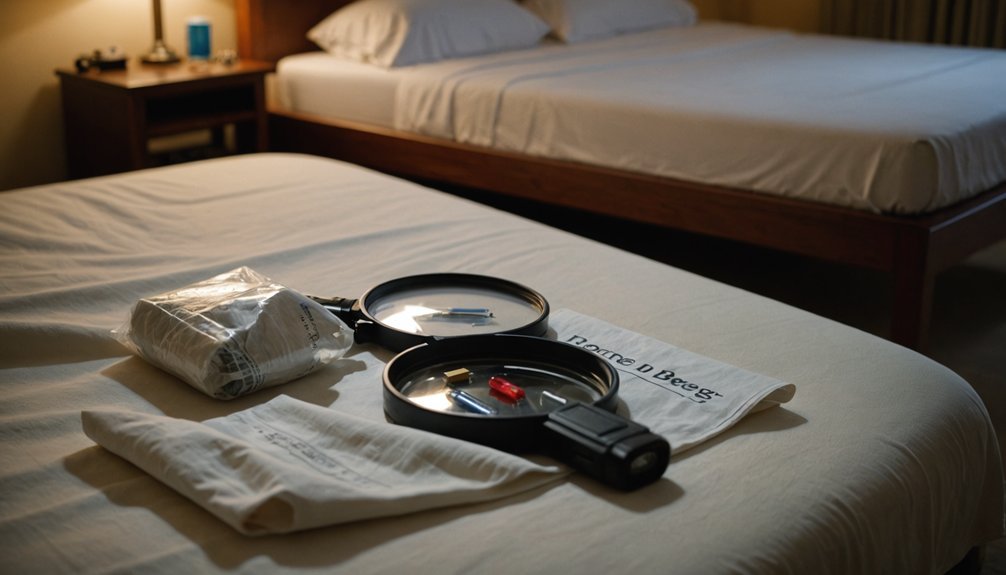
A successful bed bug inspection requires the right equipment to detect these elusive pests.
You’ll need a high-intensity blue LED flashlight made of aerospace-grade aluminum, paired with orange filter goggles to enhance visibility of blood spots, feces, and eggs through protein contrast. The rechargeable battery system provides up to 300 hours of continuous use. A quality magnifying glass is essential for identifying tiny eggs and nymphs that are often transparent and as small as one millimeter.
Don’t forget to pack collection supplies like re-sealable plastic bags or small vials for storing specimens, and needle-nose forceps for handling bugs without contamination.
For ongoing monitoring, consider bringing bed bug interceptors to place under furniture legs. These traps will capture any bed bugs moving between their hiding spots and potential feeding areas.
Initial Room Assessment and Entry Protocol
When you first enter a hotel room for bed bug inspection, preparation and protocol are essential for success. Leave your luggage outside or in a protected container away from the sleeping area until you’ve confirmed the room is bug-free. Enter with only your essential inspection tools and clean hands or disposable gloves to prevent contamination.
Before disturbing any furniture or bedding, conduct a calm, methodical visual sweep of the room. Focus on the bed area, headboards, and upholstered furniture, looking for dark spots, blood stains, or unusual sweet-musty odors. Look carefully for tiny white eggs scattered around potential hiding spots, as these are clear indicators of bed bug presence.
Use your flashlight to examine dark crevices and furniture undersides. Pay special attention to mattress seams, box springs, and the spaces between furniture and walls where bed bugs commonly hide.
Thorough Mattress and Bedding Examination

The most telling evidence of bed bugs often surfaces during a detailed mattress and bedding inspection. Begin by stripping all bedding and examining the mattress seams, tufts, and edges with your flashlight. Look for reddish-brown bugs, tiny white eggs, or dark fecal spots. A thorough search should include checking for molted skin casings that bed bugs leave behind as they grow.
| Area to Check | What to Look For | Common Signs |
|---|---|---|
| Mattress Seams | Live bugs, eggs | Blood stains, black spots |
| Bedding/Linens | Rust-colored stains | Shed skins, eggshells |
| Box Spring/Frame | Bug clusters | Fecal matter, molted shells |
Don’t forget to check under mattress tags, inside pillow cases, and along box spring edges. Use a thin card to probe tight spaces, and pay special attention to areas where fabric meets – these junctions are prime hiding spots for bed bugs.
Furniture and Room Perimeter Check
Moving beyond the bed itself, inspecting furniture and the room’s perimeter reveals essential hiding spots for bed bugs. Check upholstered furniture by examining seams, joints, and folds, paying special attention to creases where bed bugs hide during daylight hours. Remove cushions and use a flashlight to spot dark stains or droppings along the upholstery. Using an eAuditor checklist helps ensure systematic documentation of all findings during the inspection.
Thorough inspection of furniture seams and room perimeters is crucial, as bed bugs often lurk in upholstered creases during daylight hours.
- Inspect headboards thoroughly by sliding a card behind them to check mounting areas, and examine nightstand drawers, corners, and undersides.
- Check curtain pleats, folds, and window areas, including sills and frames where bugs often congregate.
- Examine baseboards, electrical outlets, and wall edges, moving furniture slightly to access hidden spots along the perimeter.
Don’t forget to inspect luggage racks carefully before placing your belongings on them.
What to Do When You Find Signs of Bed Bugs
Discovering signs of bed bugs requires swift, decisive action to protect yourself and prevent further spread.
First, document the evidence with photos or videos, then immediately notify hotel management to request a room change or refund.
Don’t move your belongings to another room before inspecting them thoroughly.
Request a room that is not adjacent to the infested one to avoid bugs that may have spread through walls.
Isolate your luggage in sealed plastic bags and avoid placing any items on upholstered surfaces.
When you’re able to leave, inspect all your belongings carefully for signs of bugs or eggs.
Change your clothes and shower right away.
Once home, wash all clothing on high heat and vacuum your luggage thoroughly, paying special attention to seams and pockets.
If the hotel doesn’t respond appropriately, report them to local health authorities and leave detailed reviews to warn other travelers.
Conclusion
You’re now equipped to conduct a thorough bed bug inspection of your hotel room. With your flashlight and magnifying glass, you’ll spot potential infestations before they become your problem. Don’t forget to document any findings with photos and immediately alert hotel management if you discover signs of bed bugs. Stay vigilant and protect yourself from unwanted hitchhikers during your travels.